
How can positivity be toxic?
It seems strange, right? But it can. In my psychiatry practice, one of the things that is soul-crushing to hear about is someone telling of their trauma, and how they have been told repeatedly by the very people who should be their support system to “look on the bright side” or to “keep your chin up” or “be strong” when what they need more than anything is to have their experience validated in that moment. Then they are shamed for not being grateful that their lives aren’t worse. “Well at least you’re still here.” Really? What happened to the Golden Rule? “Treat others as you would have them treat you.” Many say this is the advice they would want given to them – but I would dare say if they experienced such horrific trauma they would likely feel very differently.
I agree with the words of John Kim, LMFT, in his article about this on PsychologyToday.com: “In relationships, the ‘Good Vibes Only’ mentality is toxic. Why? Because love isn’t always about positivity. It’s about growth, challenge, and, yes, conflict.” I am talking about comforting in this particular article, but it also applies to avoiding conflict, clearly (which I agree is not a good idea either). PsychologyToday.com also states: “Toxic positivity is the act of avoiding, suppressing, or rejecting negative emotions or experiences. This may take the form of denying your own emotions or someone else denying your emotions, insisting on positive thinking instead.”
Sound familiar?
This is why so many people turn away from Christianity, unfortunately. It feels fake and … wait for it … hypocritical. I do not like that word (who does?), but there it is. I hear it often, I am afraid. But here’s the thing, if those of us who are Christians are 100% honest, we are ALL hypocrites – at least to a degree. Aren’t we? Everyone is – at least a little. We all want everyone to see the best version of ourselves. Everyone has junk they don’t want seen.
Has there ever been a time in your life when you have experienced a hardship, a trauma, or just someone being unkind to you, and then another human, in an effort to cheer you up (likely well-meaning), said something like, “God won’t give you more than you can handle!” OR “Everything happens for a reason!”? Those of you who have experienced unimaginable loss – the loss of a child, a traumatic divorce (an ultimate betrayal), a loved one taken tragically … then someone comes along and says something like … that? Awww heck no. Right? Exactly. Then what exactly should be said? At a loss for words? Maybe start there. “I don’t know what to say. That is just … awful.” If it seems awful – it is entirely okay to say exactly what it is. The person experiencing it NEEDS for that experience to be validated for the horrible experience that it is.
Should we be grateful for God’s many gifts? Yes. But should we use gratefulness shaming to help others see how they should bounce back from their grief? NO. That is never appropriate. For Christians, this should not be difficult (even though it so often seems to be), as it is spelled out in Ecclesiastes chapter 3 that there is a season for EVERYTHING. When someone we care about (or SHOULD care about) is hurting, that is the time to dig deep and really think before speaking. Pay attention to the gut-wrenching pain that is being experienced and respond to THAT rather than the personal discomfort of coming up with “the right thing to say.” That will produce a better response. Every. Time.
References:
Kim, J. (2025). Why 'Good Vibes Only’ Is Toxic. Here’s the truth about avoiding conflict in relationships. The Angry Therapist. Psychology Today [Internet]. Retrieved August 19, 2026 from https://www.psychologytoday.com/us/blog/the-angry-therapist/202412/why-good-vibes-only-is-toxic
Psychology Today (2025). Toxic Positivity. [Internet]. Retrieved August 19, 2026 from https://www.psychologytoday.com/us/basics/toxic-positivity
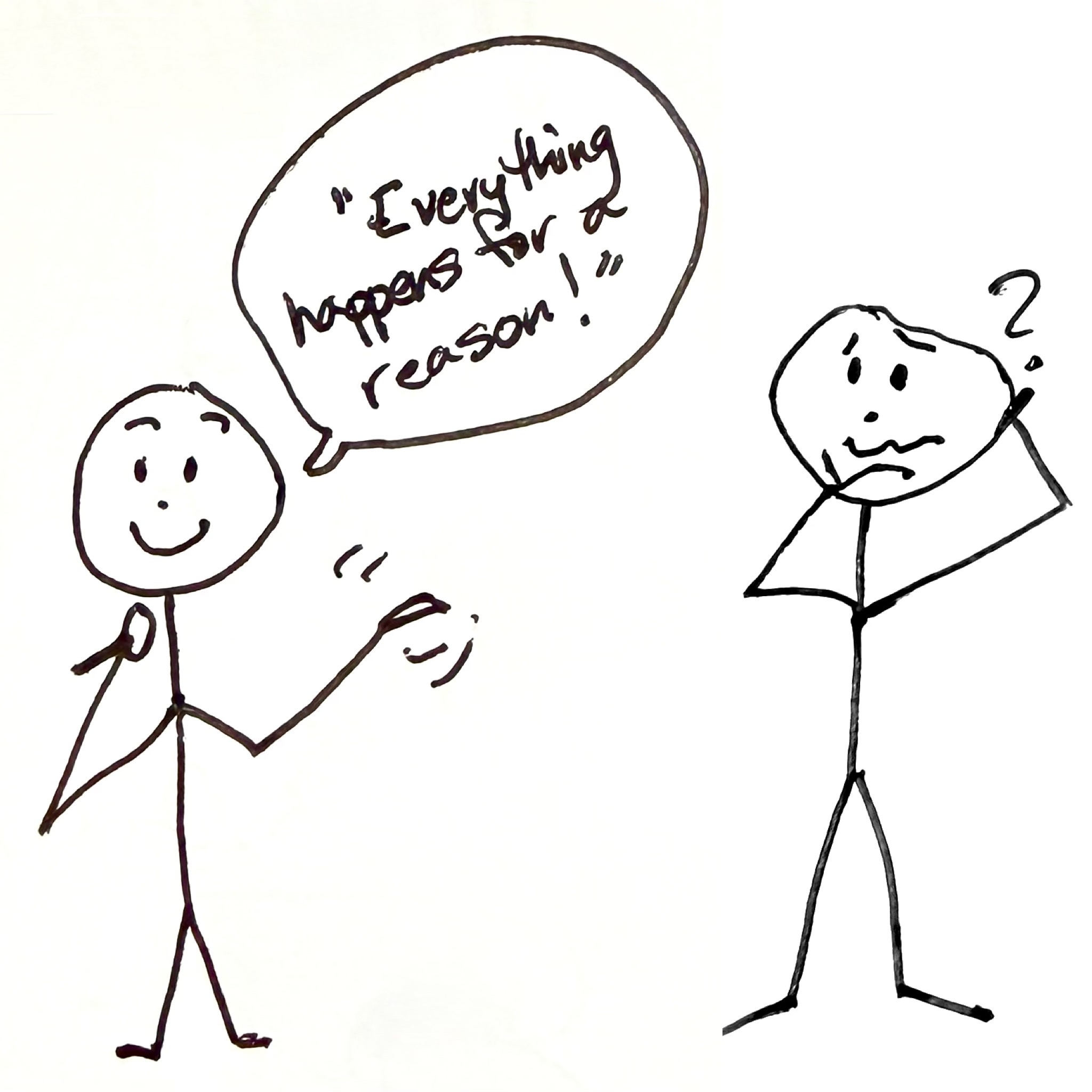
Has this happened to you?
Giftedness and Autism
Having seen my fair share of people whom I consider to be exceptionally bright in practice, I also often find these same to have a set of characteristics, that, according to the Diagnostic and Statistical Manual’s 5th edition (DSM-5), fit criteria for Autism.
See this article and consider for yourself.
https://www.psychologytoday.com/us/blog/the-science-of-self/202511/can-autism-unlock-hidden-mental-powers
It’s ALL Coercive Control

Important Information - this needs to be far more understood than it is. Watch this - it shows the ways coercive control is used to wield power in relationships, and, of course, (worst of all) in the courtroom. We ALL know people who have suffered this type of abuse. This is unbelievably common. It should be stopped - but it takes more understanding to deal with this problem.
False Memories: A Strange, Yet Common and Unsettling Phenomenon.
Did you ever wonder how on earth people can turn on their own families? I see it every single day in practice: the results of families that have been torn apart by one abuser who decided to take control of the narrative by creating a target out of a person (usually an ex-spouse) In order to gain coercive control and to hurt the target as much as possible. The damage is catastrophic. Yes, of course it hurts that target, but the people it hurts even more are those for whom the false narratives are created - and they do believe them 100%. Until years later, when they finally gain the ability to make contact with the target again only to learn they have had meaningful years of relationship stolen from them by a psychopath.
Most often, the real abuser eventually finds that (s)he is no longer the “go-to” person - often ends up alone - because of the destruction now revealed to be intentionally created. Again, I see this every single day and it is heartbreaking how common it is.
Studies have shown this is typically used by destructive individuals with no concern for anyone but themselves. Here is an article that explains it even better:
How False Memories Can Ensnare Us in a Cycle of Abuse
A dangerous form of manipulation used to control and isolate individuals.

False Allegations
How common are they? When someone wants to implode a marriage and turn the tables on the spouse they’ve abused for years, it is rather common. But how often do women/girls, and, at times, young men, come forward to falsely accuse someone they’ve loved for years of the horrible crime of sexual abuse? Rarely. Very rarely. Unfortunately, however, because the narrative is an unfriendly one that no one wants to believe, usually victims are shamed into silence by the friends and family (including church family) they are supposed to be able to trust - and (more often in cases of children/teens) will even change their story to regain support if necessary. This does immeasurable damage.
The organization GRACE Investigations (a Godly Response to Abuse in the Christian Environment) is hosting a webinar on this very topic this next week, on August 13, 2025 at 1pm Eastern. Here is the link: https://us06web.zoom.us/webinar/register/WN_19vVit-LRNS7zc0RkFtzvw#/registration